OC · Outdoor Comfort
How Terrace Surfaces and Wind Screens Shape Evening Warmth
Surface materials, planting and screens decide how long a patio stays comfortable after sunset. Learn the spatial and material choices that keep evening warmth.
By Evening PatioPublished 1354 wordsOC-001

A terrace stays warm after sunset when its surface stores daytime heat and releases it slowly, while wind screens and planting reduce the speed at which that heat is carried away. The material you walk on and the barriers around the edge matter more than the size of the space. Get those two right, and the difference between a patio that cools in twenty minutes and one that stays usable for two hours is measurable. The same principle appears in building physics, where the thermal barrier in a wall controls how heat moves through a structure; the passive climate control approach applies similar logic to the ground and envelope.
Why does the surface material matter so much after sunset?
Hard surfaces behave like a battery. Concrete, stone and brick absorb solar energy during the day and release it as longwave radiation once the air cools. The rate of release depends on density, colour and moisture. Dense, dark materials such as granite or dark concrete pavers store more heat per unit area and release it over a longer period. Light-coloured or reflective surfaces bounce more sunlight away during the day, so they have less to give back at night.
Wooden decking and composite boards sit at the other end. They have lower thermal mass, so they warm and cool quickly. That can be an advantage in hot climates where you want the surface to stop radiating before bedtime, but in temperate evenings it means the deck stops contributing warmth soon after the sun goes down. Gravel and loose aggregates have air gaps that insulate the ground below, so they store very little heat and feel cool underfoot early in the evening.
The spatial consequence is simple: the area of hard surface you place near the seating zone determines how much stored heat is available to you. A large paved area will keep radiating for longer than a small one, but it also takes longer to warm up. If your patio is shaded until late afternoon, a high-mass surface may never reach a useful temperature before sunset. For a patio, the practical question is whether the surface receives direct sun for at least three or four hours before you plan to sit out.
How do wind screens change the feel of an evening patio?
Wind strips heat from your skin and from surfaces. Even a gentle breeze at 10 km/h can make a 20°C evening feel like 15°C. A screen that blocks the prevailing wind reduces convective heat loss, so you feel warmer without any additional heat source. The key is to block the wind without blocking the view or creating a dead, stuffy corner.
Solid screens work best when they are placed on the windward side and extend at least one metre above seated head height. A screen that is too low simply redirects the breeze over your head and down into the seating area. Porous screens, such as slatted wood or woven fabric, reduce wind speed while allowing some air movement, which prevents the space from feeling closed in. In a courtyard, a single solid screen on the prevailing wind side is often enough. On an exposed terrace, you may need two screens at an angle to create a calm pocket.
The material of the screen also matters. Timber and masonry store some heat and radiate it back, while glass or metal screens feel cold and can create downdraughts. A screen that receives direct sun during the day will itself become a warm surface, adding to the radiant environment after sunset.
What role does planting play in evening comfort?
Plants influence evening warmth in three ways: they slow wind, they release moisture, and they change the radiant balance. A dense hedge or a row of shrubs acts as a porous windbreak, reducing wind speed for a distance of about ten times its height. That means a 1.5 m hedge can calm the air for 15 m downwind, which is usually enough to cover a seating area.
Moisture release, or transpiration, cools the air immediately around the leaves. This is welcome on a hot day but can make an evening feel cooler than you want. If your priority is warmth after sunset, keep dense, high-transpiration plants away from the immediate seating zone. Grasses and small shrubs with low water use are better choices near the patio edge.
Trees can also block the low sun that would otherwise warm your patio in the late afternoon. A deciduous tree to the south or west will cast a long shadow exactly when you need the heat. If you want both summer shade and evening warmth, choose a tree that loses its leaves early or place it so that the setting sun still reaches the paving.
How do surface and screen choices interact with the time of year?
The same design that keeps a patio warm in April may make it unbearable in July. In summer, you want to reduce stored heat and increase airflow. In spring and autumn, you want the opposite. The solution is not a single fixed design but a set of adjustable elements.
Movable screens, such as freestanding panels or planters on castors, let you change the wind protection from season to season. A light-coloured surface that reflects summer sun can be covered with a dark rug or mat in cooler months to add a layer of insulation and radiant warmth. Deciduous planting gives you shade in summer and lets sun through in winter.
The orientation of the patio relative to the sun is fixed, but the way you use it can change. A space that is too hot at 6 pm in July may be perfect at 8 pm in September. Observing how the sun moves across your patio at different times of year is the first step to making it comfortable after dark.
What practical steps can you take this weekend?
Start by measuring. Note the time the sun leaves your patio in the afternoon and the air temperature an hour after sunset. If the surface is cool to the touch within thirty minutes of sunset, it lacks thermal mass. Adding a dark, dense material such as brick or stone in the seating area will extend the warmth.
Next, identify the prevailing wind direction. A simple ribbon or a handful of grass thrown into the air will show you. Place a temporary screen, even a piece of plywood, on that side and see how it changes the feel. If it works, invest in a permanent screen with a material that suits your design.
Finally, look at your planting. Are there dense shrubs right next to the chairs? Move them further away or replace them with low-water plants. Are there trees casting shadows on the paving in the late afternoon? Consider pruning or relocating them.
How does this connect to larger building decisions?
The principles that govern a patio are the same ones that govern a building envelope. Thermal mass, insulation, wind barriers and solar gain all interact. If you are planning a renovation or a new build, the way you treat the ground around the house can affect the microclimate of your outdoor space. A paved area that is too large may overheat in summer, while a small one may not store enough heat for spring evenings.
For readers who want to understand how these ideas apply at the scale of a whole building, the German-language magazine Bauklima Magazin explains passive cooling, thermal barriers and the history of solar and geothermal systems. It is a useful reference for the physics behind the choices you make on a terrace.
What is the single most important takeaway?
Match the surface to the sun and the screen to the wind. A dense, dark surface that receives direct afternoon sun will release heat for hours after sunset. A porous screen on the windward side will keep that heat around you instead of letting it blow away. Planting should be low and sparse near the seating area, with taller windbreaks further back. Get these three elements right, and your patio will stay comfortable long after the light fades.
Reading notes
Next on the programme
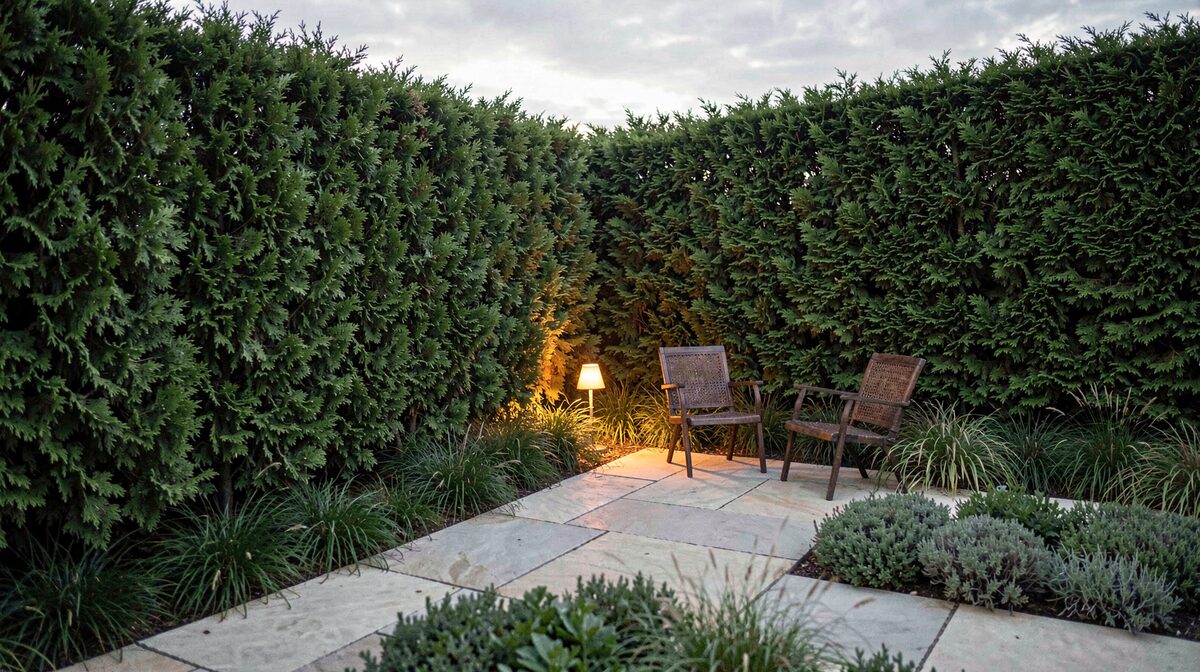 OC-003 · Outdoor ComfortLow Planting and Windbreaks on an Evening Terrace
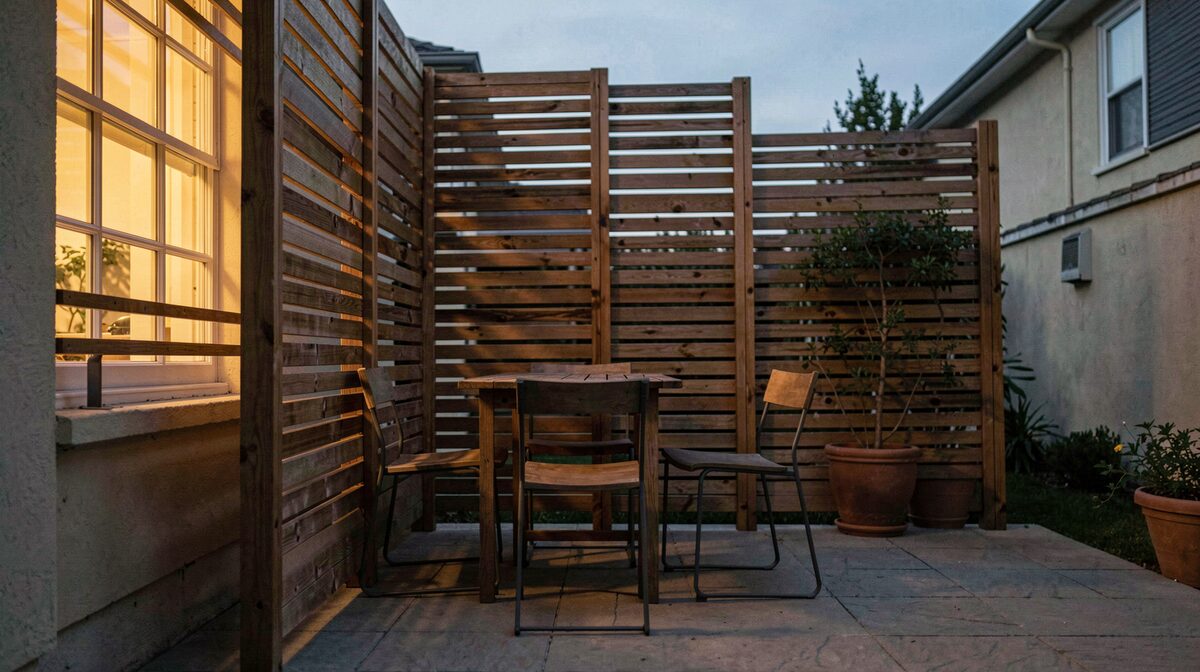 OC-002 · Outdoor ComfortHow a Privacy Screen Changes Wind, Sound and Warmth
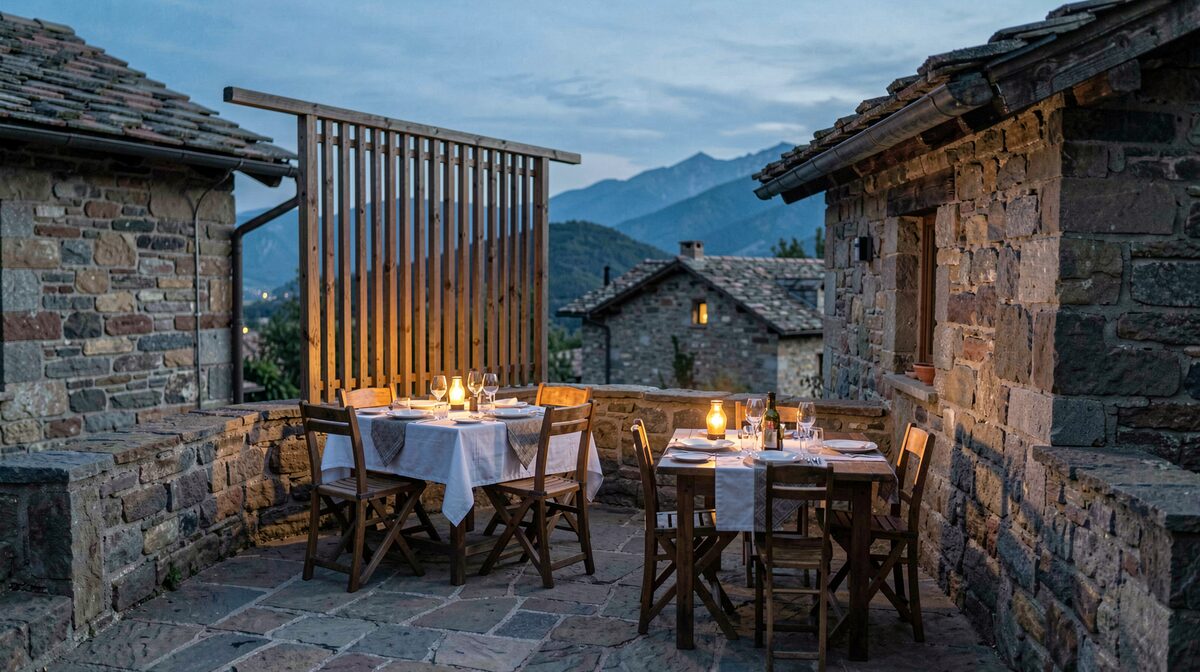 PP-003 · Patio PlanningLaying Out a Terrace for Evening Guests


